
About CoSAR
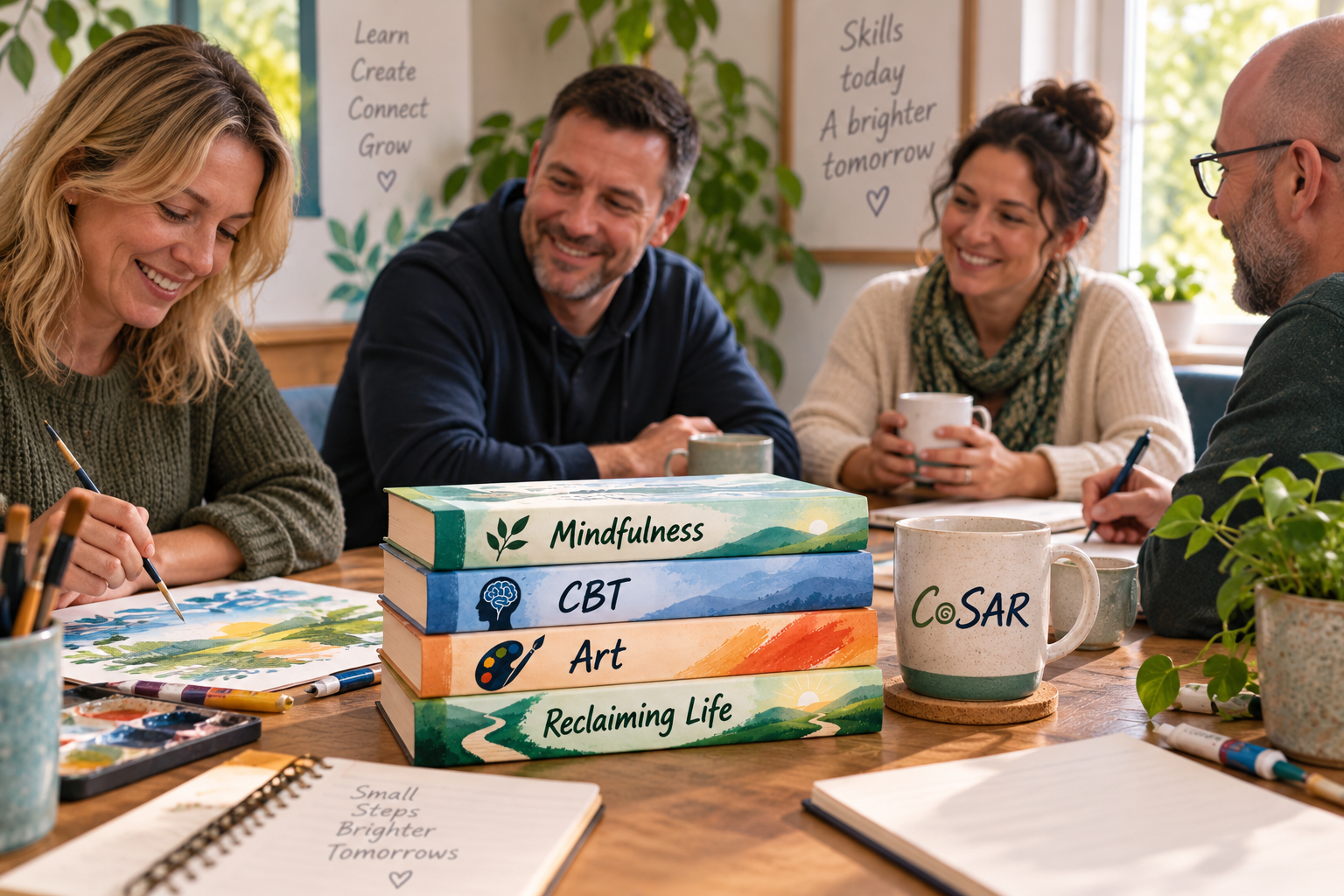
CoSAR (Coping Skills for Addiction Recovery) is an aftercare and recovery skills programme designed for people in early recovery from addiction. It helps participants rebuild confidence, strengthen coping skills, reconnect with others, and create a more meaningful life. CoSAR can be delivered as a standalone recovery skills programme or alongside other support services, making it a flexible fit for different recovery journeys.
Four Core Elements
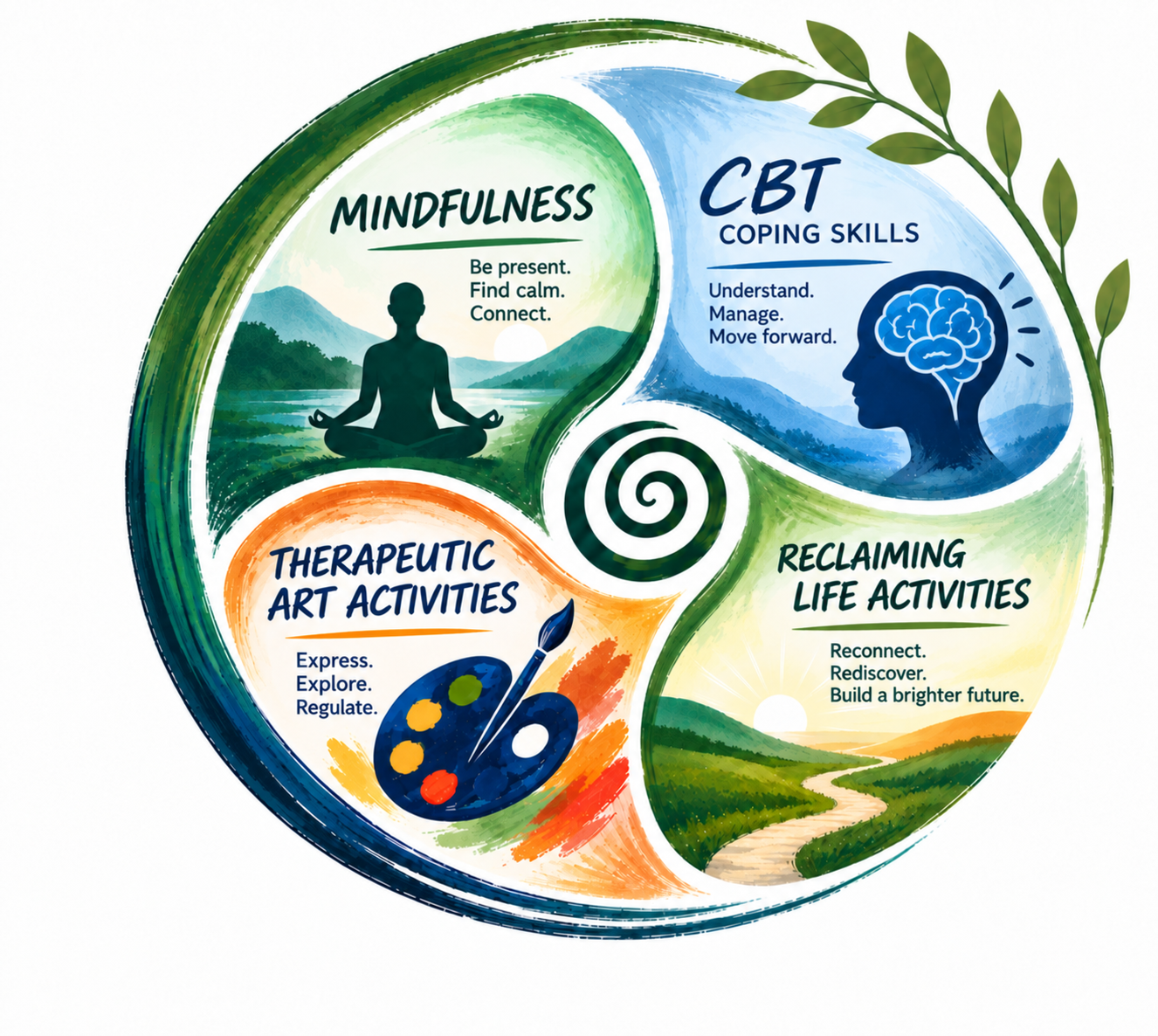
The programme is built around twelve structured modules, woven throughout with four integrated themes:
• Mindfulness
• CBT-Informed Coping Skills
• Therapeutic Art Activities
• Reclaiming Life Activities
Each is delivered in a way that is safe, practical, trauma-sensitive, and literacy-friendly — ensuring the programme is accessible to all participants.
CoSAR Modules
CoSAR's 12 modules include
· Getting Started.
· Looking Forward.
· Setting Goals.
· Reclaiming Life.
· Connecting with Key Strengths.
· Building Community Supports for Recovery.
· Developing Refusal Skills.
· Dealing with Urges to Drink or Use.
· Understanding Unhelpful Thinking.
· Meeting Difficult Emotions.
· Developing a Recovery Blueprint.
· Bringing it All Together.

Small Steps, Meaningful Change
CoSAR supports participants in taking small, realistic, and meaningful steps toward stability, self-awareness, connection, and hope. At its core, CoSAR is about helping people use their learning, strengths, and supports to grow, flourish, and build a life beyond addiction that feels healthier and steadier.

CoSAR Evaluation
A recent University College Cork (UCC) evaluation found that CoSAR delivered real benefits for participants. Anxiety and depression symptoms were reported to have reduced from mild to minimal levels. Participants also reported maintaining abstinence and felt confident that CoSAR supported their recovery.
Combining cognitive behavioural strategies, mindfulness, therapeutic art activities, and life-reclaiming activities the supportive group environment fostered confidence, self-reflection, and community connection. The majority of participants would recommend the programme to others. Facilitators viewed CoSAR as an innovative aftercare model and were highly committed to its delivery (Coughlan, O'Toole, & Raupe, 2025).